
India needs a 40-fold increase in non-fossil energy by 2027!
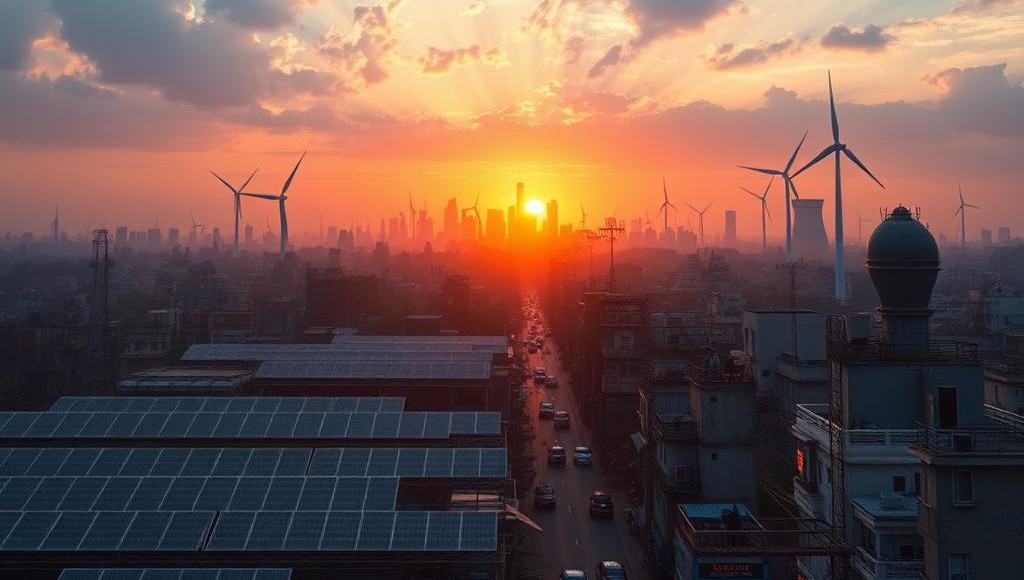
Image: AI-generated
India needs a 40-fold increase in non-fossil energy by 2027! – India is at a turning point in its development path, with its ambition to become a developed country by 2027 going hand in hand with a necessary energy transformation. The recently published EY-CII report emphasises that India needs a 40-fold increase in non-fossil energy sources to realise this ambition. In this article, we explore the challenges, opportunities and strategies required for this ambitious transition.
In 2023, India’s energy production will still be largely dependent on fossil fuels such as coal, oil and natural gas. This dependence has led to increasing environmental challenges such as air pollution and climate change. The current scenario calls for an urgent shift to cleaner energy sources to ensure both economic growth and environmental conservation.
What does this growth entail?
A 40-fold increase in non-fossil energy means a huge expansion in renewable energy capacity. This includes solar and wind energy, hydropower and nuclear energy. India has already set ambitious targets within its National Solar Mission, including achieving 100 GW of solar capacity. However, achieving this broader goal requires integrated efforts across different sectors and technologies.
Solar and wind energy
India has a favourable climate for both solar and wind energy. The report emphasises the need for investment, subsidies and international cooperation to realise these projects on a large scale. Large-scale solar parks and wind farms, as well as improvements to the electricity grid, are crucial.
The role of nuclear energy and hydropower
Alongside solar and wind energy, nuclear energy and hydropower remain essential components of the non-fossil fuel mix. Nuclear energy offers a stable and reliable source of energy, with new plants due to be operational by 2027. Hydropower projects must be developed sustainably, with a minimal ecological footprint.
Challenges in the transition to renewable energy
The switch to non-fossil energy sources presents several challenges, including technological, financial and policy barriers. There is a need for substantial investment in renewable energy infrastructure, grid integration and energy storage solutions.
Financial investment and policy support
Achieving a 40-fold increase will require significant financial resources, including investment from the private sector and international funds. Policies that stimulate innovation and promote cooperation between the public and private sectors are essential for mobilising these investments.
Technological innovations
Technological advances, particularly in energy storage and smart grids, are essential for harnessing and managing renewable energy. Innovations in energy-efficient technologies and electric mobility will help reduce overall energy consumption.
Opportunities for economic growth and sustainability
The transition to non-fossil energy is more than just an environmental necessity; it also offers significant economic opportunities. It promises employment, energy security and the possibility of making India an exporter of renewable technology.
Employment and economic development
The expansion of the renewable energy sector can lead to new jobs in manufacturing, installation and maintenance. It is important that training and development programmes ensure that the workforce is ready to meet the demands of a greener economy.
Energy security and export potential
By reducing its dependence on imported fossil fuels, India can improve its energy security. Furthermore, as a centre of innovation and manufacturing in renewable technology, India can export its expertise and products.
Conclusion
India’s goal of a 40-fold increase in non-fossil energy by 2027 is both ambitious and necessary. This journey requires collective action from the government, industry and the public to overcome challenges and seize opportunities. With sustained efforts, India can not only advance towards developed country status, but also pave the way for a sustainable future.
Source: EY India
Also read: India’s chemical sector experiences unparalleled growth
Reservation
This information has been compiled with the greatest possible care, in some cases from different information sources and sometimes with the help of AI. (Interpretation) errors are not excluded. No legal obligation can therefore be derived from this text. Everyone dealing with this subject has the responsibility to delve into the matter!